
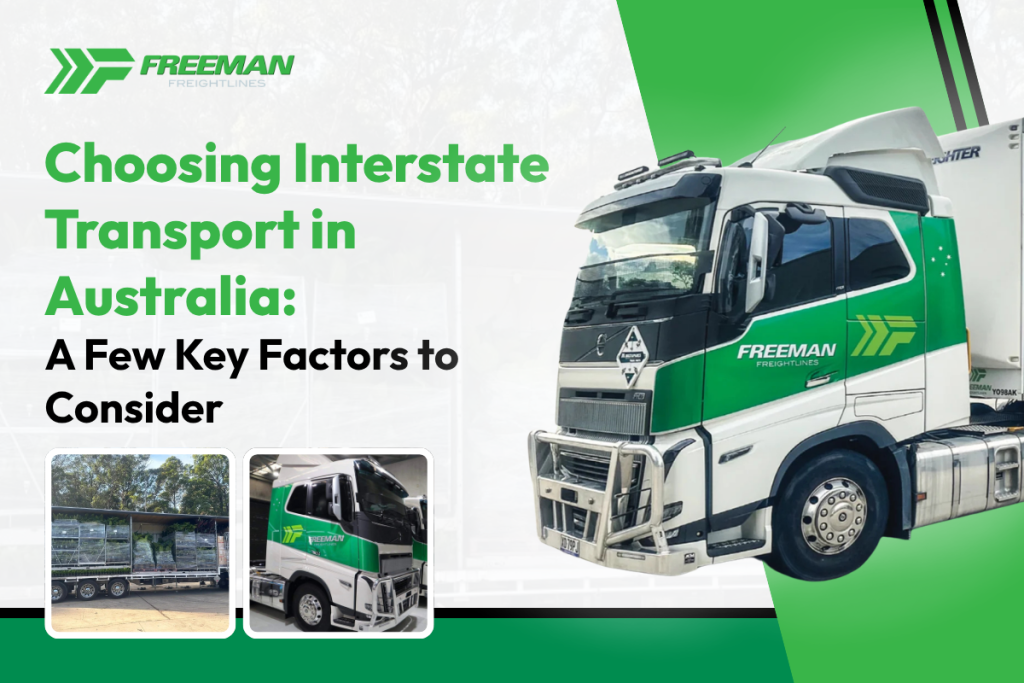
Moving freight between Australian states involves much more than simply arranging a truck and setting a delivery date. Businesses need to consider distance, freight type, delivery schedules, handling requirements and communication throughout the journey. The right transport partner can make this process considerably easier, while an unsuitable provider can create unnecessary delays, additional costs and operational headaches.
At Freeman Freightlines, we know that every business has different freight requirements. From regular commercial deliveries to larger and more complex loads, dependable interstate transport needs careful planning from collection to final delivery.
Choosing a transport company should therefore involve more than comparing prices. Businesses need to look at the provider’s experience, capabilities, communication, safety practices and ability to handle specific freight requirements. Here are some key things we recommend considering before deciding.
Crucial Things to Consider While Choosing Interstate Transport in Australia
Look at Experience and Interstate Coverage
Australia’s size makes experience particularly important when arranging long-distance freight movements. A company that regularly handles interstate deliveries is more likely to understand the practical challenges involved in moving goods across different states and territories.
Before choosing a provider, businesses should check how long the company has been operating and the locations it services. It is also worth considering whether the provider has experience with the type of freight being moved.
An experienced interstate transport provider can plan routes more effectively, account for delivery requirements and coordinate different stages of a journey. This can be particularly valuable for businesses that depend on consistent freight movements as part of their daily operations.
At Freeman Freightlines, we focus on providing reliable transport solutions for businesses moving freight across Australia. Our experience helps us approach each movement with practical planning rather than relying on a one-size-fits-all process.
Check the Company’s Fleet and Freight Capabilities
Not every transport company has the equipment or capacity to handle every type of freight. Before engaging a provider, businesses should understand what vehicles and transport solutions are available.
Consider the size, weight and nature of the freight. A provider should be able to explain which vehicle or transport option is appropriate for the particular load. Businesses should also ask about loading and unloading requirements, freight handling and any special considerations associated with the goods.
This is where reliable interstate trucking can make a difference. Suitable vehicles and experienced drivers can help ensure freight is handled appropriately throughout the journey.
It is also useful to find out if a transport company can support changing freight volumes. A business may have relatively predictable requirements today but need additional capacity during busy periods. Working with a provider that can adapt to these changes can make freight planning much simpler.
Consider Communication and Delivery Visibility
Good communication is one of the easiest things to overlook when selecting a freight provider. Once goods leave a warehouse or business premises, the sender still needs confidence that the delivery is progressing as planned.
Ask potential transport companies how they communicate with customers before and during a delivery. Find out how updates are provided and who the business can contact if delivery details change.
For businesses managing regular interstate transport, clear communication can help teams coordinate warehouses, customers, suppliers and receiving locations more efficiently. It can also reduce uncertainty when unexpected circumstances affect a delivery schedule.
We believe communication should remain straightforward and practical. Businesses should know what is happening with their freight and have a clear point of contact when they need assistance. This approach helps create a smoother experience from collection to delivery.
Don’t Make Price the Only Deciding Factor
Cost naturally matters when selecting a transport provider, but the cheapest quote is not always the most suitable option. Businesses should look at what is included in the quoted service and consider the overall value being offered.
A lower price may not provide the same level of service, freight handling, communication or flexibility as another provider. Unexpected fees, delays or poor coordination can also affect the actual cost of a transport arrangement.
When comparing interstate trucking providers, businesses should therefore look beyond the initial figure. Consider reliability, service capabilities, experience, communication and the provider’s ability to meet delivery requirements.
The right transport partner should offer a sensible balance between cost and service quality. Freeman Freightlines works with businesses to understand their freight requirements and provides practical transport solutions designed around those needs.
Conclusion
Selecting an interstate transport company is an important operational decision for businesses that regularly move goods across Australia. The right provider can help simplify freight movements, support reliable deliveries and make day-to-day logistics easier to manage. Businesses should take the time to understand what a transport company offers rather than making a decision based solely on price.
At Freeman Freightlines, we provide dependable interstate transport solutions with a practical focus on freight requirements, communication and service. If your business needs a transport partner for regular or one-off freight movements across Australia, our team is ready to help plan a solution that fits your requirements.
FAQs
Why is experience important when choosing interstate transport?
Experienced providers understand long-distance freight requirements, route planning, handling considerations and the practical challenges involved in interstate deliveries.
How can businesses compare interstate trucking providers?
Compare their experience, fleet, service areas, communication processes, freight capabilities and overall value rather than focusing only on quoted prices.
Does the type of freight affect the choice of transport company?
Yes. Freight size, weight, quantity and handling requirements can influence the vehicle, equipment and transport solution needed for the delivery.
Why is communication important during interstate freight delivery?
Clear communication helps businesses monitor deliveries, coordinate receiving locations and respond more effectively if schedules or delivery requirements change.
Should businesses always choose the cheapest transport quote?
No! Before choosing, businesses should consider the complete service, including reliability, freight handling, communication, capabilities and potential additional costs.