
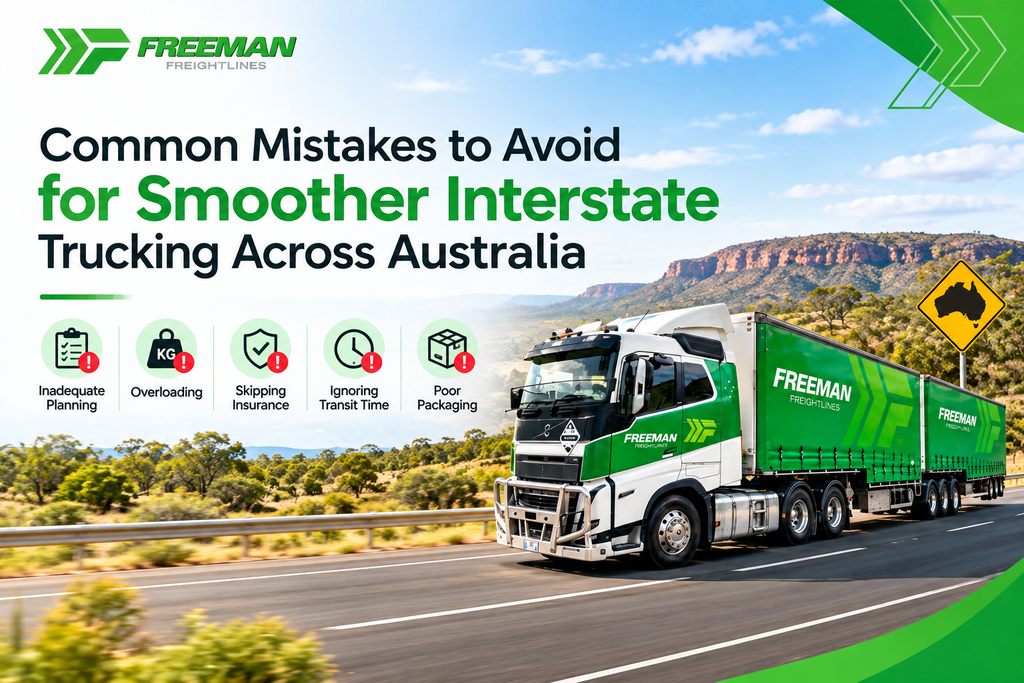
When freight needs to travel across Australia, every hour counts. A delayed shipment can disrupt warehouse operations, leave retail shelves waiting for stock, hold up construction projects and affect commitments made to customers. While some disruptions, such as severe weather or unexpected road closures, are beyond anyone’s control, many transport delays can be prevented with better preparation and communication.
Successful interstate transport involves much more than moving goods from one city to another. It requires accurate freight information, careful route planning, compliant vehicles, safe loading practices and coordination between everyone involved in the delivery process. Overlooking even one of these elements can create a chain reaction that affects the entire supply schedule.
At Freeman Freightlines, we know the importance of dependable freight movement across Australia. With decades of industry experience, we focus on careful planning, experienced drivers, purpose-built vehicles and freight visibility to support businesses with their transport requirements. Our services cover linehaul, less-than-truckload (LTL) freight and urgent hot-shot deliveries.
So, what should businesses watch out for when arranging their next shipment? Here are some crucial considerations to avoid if you want to minimise preventable delays and keep your freight moving efficiently.
Inaccurate Freight Details and Incomplete Documentation
One of the easiest ways to cause a transport delay is to provide incorrect or incomplete information before the freight even leaves the pickup location. Missing details can create confusion during booking, lead to unsuitable vehicle allocation and cause unnecessary waiting when the driver arrives.
For example, a business might book a shipment based on pallet quantities but fail to communicate the actual dimensions, total weight or special handling requirements. If the allocated vehicle cannot accommodate the load safely, the shipment may need to be rescheduled. Similarly, incorrect delivery addresses, unavailable contact details or unclear unloading instructions can prevent a driver from completing a delivery as planned.
Documentation and compliance requirements also deserve attention. Depending on the freight type, route and load, specific permits, declarations or supporting documents may be necessary. Incomplete paperwork can result in additional checks, rejected consignments or delays at relevant checkpoints.
What should businesses do?
· Provide accurate freight dimensions, weight, quantity and cargo descriptions during booking.
· Clearly communicate special handling requirements for fragile, high-value or temperature-sensitive goods.
· Confirm pickup and delivery addresses, site access restrictions and the availability of unloading equipment.
· Prepare the relevant consignment documents and check applicable transport requirements before dispatch.
· Notify the transport provider promptly if the shipment details change.
At Freeman Freightlines, we assess freight type, load size, delivery timelines and compliance requirements as part of our planning process. Sharing complete information from the outset helps us select a suitable transport solution and reduce avoidable complications. For businesses arranging interstate transport, getting the details right before collection is a practical step towards a more predictable delivery schedule.
Poor Route Planning and Unrealistic Delivery Schedules
Australia’s vast geography presents unique challenges for road freight. A shipment travelling between Sydney and Melbourne has different planning requirements from one moving between Sydney and Far North Queensland. Distance is only one consideration. Traffic congestion, roadworks, weather conditions, restricted access, road closures and mandatory driver rest periods can all influence transit times.
A common mistake is to estimate delivery times using distance alone. Even when the route appears straightforward, unexpected disruptions can affect progress. Building a schedule with no flexibility leaves little room to respond when conditions change. On the other hand, planning around realistic transit windows allows transport teams to manage expectations and make informed adjustments.
Compliance with heavy vehicle safety requirements is equally important. Driver fatigue management, speed limits, vehicle standards and other applicable obligations must remain priorities throughout the journey. Rushing a driver to recover lost time is not a responsible solution and may introduce further risks.
What should businesses do?
· Share the required delivery date and any fixed receiving appointments before confirming the booking.
· Allow realistic transit windows that account for route conditions and necessary driver rest breaks.
· Confirm site operating hours, delivery access restrictions and any vehicle limitations.
· Work with a provider that monitors route conditions and communicates significant disruptions.
· Identify alternative arrangements for urgent consignments that cannot miss a critical deadline.
Effective route planning is a core part of reliable interstate trucking. At Freeman Freightlines, our operations team coordinates routes and schedules to help reduce unnecessary transit time and manage freight movements more efficiently. We also offer 24/7 tracking and support, helping customers stay informed when plans need attention.
A well-planned schedule is not simply about reaching the destination quickly. It is about balancing delivery commitments, road conditions, safety and compliance without compromising the people or goods involved.
Last-Minute Changes and Poor Coordination at Pickup or Delivery
Even a well-planned shipment can fall behind schedule when pickup or delivery arrangements are not ready. A truck may arrive at the scheduled time, only to find that the freight has not been packed, the loading area is occupied or the required staff are unavailable. Similar issues can occur at the receiving end when a warehouse is closed, unloading equipment is inaccessible or the consignee has not been informed of the arrival.
These problems may appear minor, but their impact can extend beyond a single delivery. Waiting time can disrupt subsequent bookings, affect vehicle availability and create scheduling pressure across the freight network. Last-minute changes to quantities, delivery locations or unloading requirements can add further complications.
Communication is particularly important when several parties are involved, including suppliers, warehouse teams, freight operators and customers. If each party works from different information, even a simple consignment can become difficult to coordinate.
What should businesses do?
· Ensure freight is packed, labelled and ready before the agreed collection time.
· Confirm that loading and unloading equipment, site personnel and access arrangements are available.
· Share delivery appointments and receiving instructions with everyone involved.
· Communicate changes to shipment details or operating hours as early as possible.
· Use tracking updates and direct communication to identify issues before they escalate.
For businesses managing frequent interstate transport movements, consistent processes can make a meaningful difference. Standardised booking procedures, clear contact responsibilities and timely updates help prevent avoidable waiting and confusion.
At Freeman Freightlines, we combine planned freight movements with tracking and transit management to support better visibility throughout the journey. Our warehousing and distribution capabilities can also assist businesses that require freight consolidation, storage, pick and pack, or coordinated dispatch. Bringing these activities together can simplify logistics and reduce unnecessary handling between transport stages.
Conclusion
Avoiding transport delays starts well before a truck leaves the depot. Accurate shipment details, realistic scheduling and proper coordination at both ends of the journey can help businesses prevent common setbacks and maintain smoother supply chains.
Choosing an experienced freight partner is just as important. At Freeman Freightlines, we bring decades of transport experience, route planning, tracking and integrated warehousing capabilities to support businesses moving goods across Australia. Our interstate trucking solutions are designed around different freight requirements, from urgent consignments to full-load and consolidated shipments.
When your delivery commitments matter, preparation and communication make all the difference. Contact Freeman Freightlines to discuss your freight requirements and find a transport solution that supports your business with reliable planning, careful handling and greater visibility from pickup to delivery.
Frequently Asked Questions
What are the most common causes of interstate freight delays?
Incomplete documentation, poor route planning, adverse weather, vehicle issues, loading delays and inadequate coordination can all affect delivery schedules.
How can businesses prepare freight to prevent transport delays?
Businesses should confirm shipment details, complete documentation, secure packaging, arrange site access and ensure goods are ready before collection.
How does route planning improve interstate delivery times?
Route planning considers road conditions, traffic, rest breaks and delivery commitments, helping transport operators select practical routes and realistic schedules.
Why is accurate documentation important for interstate freight?
Accurate documentation helps verify shipment details, supports applicable compliance requirements and reduces the risk of avoidable administrative delays.
Can real-time tracking help reduce interstate trucking delays?
Yes. Tracking improves shipment visibility, supports timely updates and helps businesses respond promptly when disruptions affect planned delivery schedules.
What should businesses consider when choosing an interstate transport provider?
Businesses should assess industry experience, safety practices, fleet suitability, tracking capabilities, communication standards and the provider’s ability to handle their freight requirements.
Does Freeman Freightlines offer warehousing alongside interstate transport?
Yes. Freeman Freightlines offers warehousing and distribution capabilities, including freight consolidation, storage, pick and pack, dispatch and container de-stuffing.