
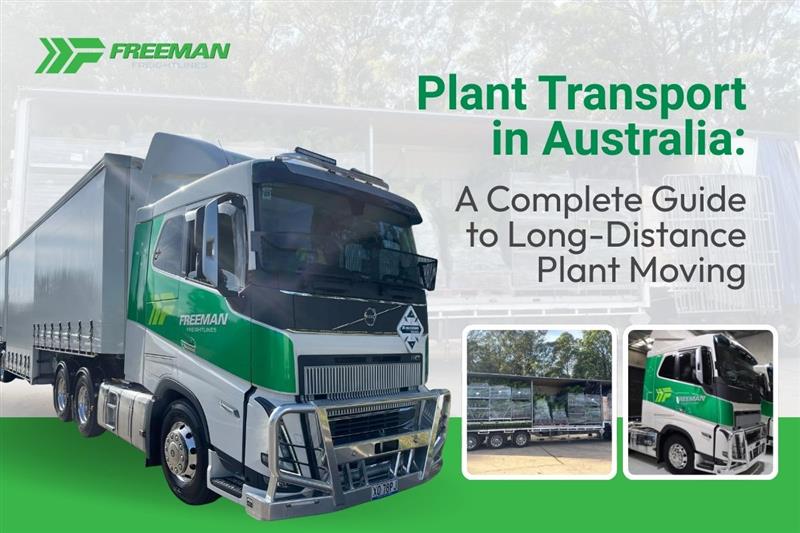
Live plant moving is a dedicated matter of fact, as not all plants can handle the long-distance travel, creating a restriction due to biosecurity concerns. Professional freight management services play an essential role here, while maintaining your live plant transport with the necessary steps.
What do you need to know in the process of live plant transport?
With the Australian nursery and horticulture sector contributing over $3 billion annually to the economy and interstate plant movement growing each year, professional long-distance plant transport has become essential, not optional.
This guide explains how long-distance plant moving really works, what risks businesses and growers must manage, and how modern freight management services support safe, compliant, and commercially reliable plant logistics.
How Plant Transport Is Different From Standard Freight?
Unlike static freight, plants continue biological processes during transit. They respire, lose moisture, and respond to temperature, vibration, and light exposure. Even short-term environmental stress can permanently damage plant structure, root systems, and commercial value.
The horticulture logistics reports suggest that over 35% of plant losses during transport are linked to heat exposure, airflow restriction, and load compression rather than distance alone. To avoid this risk, businesses should consider expert plant transport management.
This table will help you understand the difference better:
| Category | Live Plant Logistics | Standard Logistics |
| Nature of Cargo | Living, biological goods that continue to respire, dehydrate, and react to the environment. | Non-living goods that remain stable and unchanged during transport. |
| Handling Requirements | Requires gentle, specialised handling to protect roots, foliage, and plant structure. | Focuses mainly on secure stacking, weight balance, and load restraint. |
| Environmental Control | Needs airflow, temperature regulation, humidity control, and light management. | Usually transported in uncontrolled or general freight environments. |
| Packaging & Loading | Uses breathable materials, plant stillages, spacing systems, and upright positioning. | Uses pallets, cartons, shrink wrap, and space-maximising stacking. |
| Transit Monitoring | Continuous monitoring for temperature, vibration, and moisture conditions. | Tracking mainly focused on location and delivery timing. |
| Biosecurity Compliance | Strict quarantine, pest-control, and movement documentation required. | Minimal biological compliance unless hazardous or regulated freight. |
| Risk Profile | High sensitivity to heat, vibration, delay, and improper handling. | Lower sensitivity; risks mainly relate to breakage or loss. |
| Delivery Priorities | Plant health, viability, presentation, and stress reduction. | On-time arrival, cost efficiency, and load security. |
| Operational Expertise | Requires horticultural knowledge, specialist drivers, and live-cargo procedures. | Requires general freight handling and transport expertise. |
| Failure Impact | Plant death, disease spread, rejected stock, and financial loss. | Damaged goods, delays, or replacement costs. |
The Real Risks of Long-Distance Plant Moving
Long-distance plant movement across Australia introduces several compounded risks:
Environmental Stress
Heat build-up inside enclosed vehicles can rise by 15–20°C above ambient temperatures if ventilation is poor. This accelerates moisture loss and weakens plant tissue.
Mechanical Damage
Sudden braking, vibration, and improper stacking cause stem breakage, soil displacement, and root trauma; these are often invisible at delivery but fatal within days.
Biosecurity Non-Compliance
Australia’s strict biosecurity framework regulates the interstate movement of soil, plants, and organic material. Non-compliance can lead to on-the-spot destruction of stock, major fines, and suspended trading approvals.
Extended Transit Times
Delays increase dehydration, fungal development, and pest risk. Professional freight management services reduce this risk through route optimisation and monitored transit schedules.
How Do Live Plant Transport Services Benefit Your Plant Transport in Australia?
Live plant transport services are specialist logistical solutions made to guarantee that plants survive the journey without becoming damaged, drying out, or losing their nutritional content. Because plants are sensitive to variations in temperature, light, and movement, these services concentrate on keeping them healthy and hydrated.
The key features of professional live plant transport services are:
Customised Transport
Offering both full truckload (FTL) and less than truckload (LTL), get the customised packaging and transport with routes, vehicles, and load methods matched to plant species, season, and travel distance.
Environmental Check & Control
Get vehicles that are well equipped with climate-control systems, refrigeration, or heating to prevent damage from extreme temperatures. To further ensure that plants get managed airflow, temperature stability, and humidity awareness during transit.
Handle With Care
All well-trained staff who are well aware of the technology and equipment, upright positioning, and shock-reduction methods to keep the plants safe and stable even after delivery.
Hydration Management
Included with moisture control systems that reduce dehydration without encouraging fungal growth.
Safe Packing and Loading
Controlled methods, breathable wrapping, plant stillages, and spacing systems that prevent compression and reduce dehydration.
Real-Time Tracking
GPS-equipped vehicles offer round-the-clock tracking, enabling clients to keep an eye on the whereabouts and state of their plants.
Rapid Delivery
These services prioritise prompt, frequently same-day or next-day delivery and employ, for instance, “milk-run” routes for regular, consistent restocking to reduce stress on the plant.
Why Do Freight Management Services Matter in Plant Logistics?
More than point A to point B transport, reliable plant logistics are based on efficient freight management services.
- Do they concentrate on transporting plants rather than just regular freight?
- Are they able to show that they are knowledgeable about interstate compliance and biosecurity?
- Are cars set up for the stability and ventilation of live cargo?
- Is there more monitoring than just GPS tracking?
- Are they aware of the risks associated with seasonal transportation?
- Are they scalable for farmers, nurseries, landscapers, and wholesalers?
Vehicle appropriateness, seasonal risk management, compliance documents, loading systems, backup plans, and delivery scheduling are all coordinated by freight managers in plant logistics. Plants are guaranteed to be viable, ready for sale, and compliant with the law thanks to this comprehensive control.
Think Before You Choose
If you are looking for a reliable plant freight logistics company in Australia, then first ask your operator these questions:
Be safe and be prepared with Freeman Freightlines. Here, you get the best services based on your requirements. Both growers and plant businesses can move livestock safely, reduce losses, and protect both commercial value and regulatory standing.