
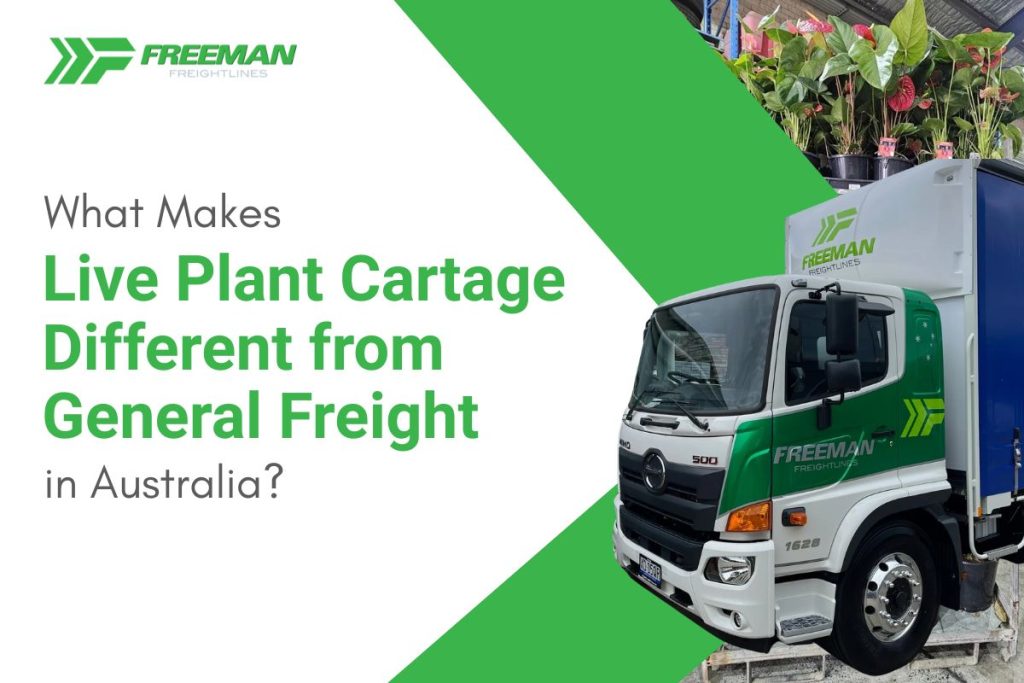
Carrying live plants from one place to another is not easy. These are living things that demand special care, maintenance, and better handling. Choosing general freight to transport livestock is not a good idea. This can result in damaged plants, delayed deliveries and unavoidable losses.
Here, live plant cartage can transport plants. These are specialised logistics processes that protect living cargo every step of the way.
Plants Breathe, Grow, & React
Unlike crates or cartons, plants are biologically active and continue to breathe and transpire while in transit. This makes them extremely sensitive to how they are loaded, stacked, ventilated, and timed throughout the transport journey. Pallets and packaged goods can withstand vibration, temperature fluctuations, and extended delays. Living plants, however, respond immediately to stress. Especially when moving long distances across state borders.
Every plant transport, even short exposure to excessive heat, poor airflow, or moisture buildup, can cause:
- Leaf burn
- Root decay
- Wilting
- Growth shock
- Disease development
In this process of live plant cartage, general freight processes apply uniform handling standards. On the other hand, plant freight management services require custom handling protocols at every stage.
The Difference Between Plant Cartage & General Freight Services
General Freight Services treats all cargo like inanimate objects. Pallets, boxes and equipment are all handled quickly. Also, these services do not account for any temperature control, airflow or humidity. Often loaded and unloaded mechanically with little regard for fragility beyond standard safety protocols. Mostly, these logistics focus on speed and routing efficiency, and forget to take added sensitive measures.
On the other hand, live plant freight forwarding service treats plant cargo with both care and speed. All additional care is taken to prevent shock, stress and deterioration to the plants. In order to prevent rot, dehydration, and heat damage, live plants must be transported under stable circumstances. Expert carriers reduce environmental dangers and keep an eye on climate exposure. Manual handling, cautious spacing, and specialist loading structures that stop movement or crushing are all part of plant cartage.
Further, for plant safety, there is plant warehousing that takes into consideration light exposure, ventilation, growing conditions, and quick distribution cycles. By using specific infrastructure, skilled personnel, and plant-focused practices, live plant logistics seeks to minimise loss before it happens. Prevention, not compensation, is the main aim of plant transport freight services.
Risks Added With General Freight Service
Frail Temperature Exposure
Living items are sensitive to high and low temperatures. With general freight, there is no protection, and plants may experience dehydration, heat stress, or cold shock.
Inadequate Ventilation
Conventional trailers are not made for biological airflow but rather for sealed goods. Here, the insufficient ventilation increases the danger of decay and illness by trapping heat and moisture.
Improper Loading Procedures
Plants can be positioned beneath large loads or piled like boxes, creating stuffing or compaction. Most commonly, the outcomes here are soil compaction, broken stems, and crushed foliage.
Absence of Monitoring In Transit
Mostly, in general freight service, drivers don’t verify the condition of the plant while travelling. Until birth, signs of discomfort are frequently overlooked.
Unsuitable Holding Conditions
Cargo, not plants, is the purpose of goods yards. Plants are frequently left in hot, dark, or crowded conditions due to delays.
Limited Responsibility
Most freight providers do not take responsibility for living things like plants. This can increase their liability if anything happens to the plant.
The Cost Of “Cheap Freight” For Nurseries
Cheap freight may look good on a quote, but for nurseries, it often delivers hidden costs that surface too late. Cheap freight is friendly for a short time, but in the long term it can cost for plant protection. The poor handling results in serious damage or unsellable plants, delivery delays affect seasonal sales, and customer dissatisfaction weakens brand reputation. It’s not that; sometimes, cheap freight adds more refunds, stock replacement, and extra labour expenses.
Some other disadvantages include-
- Lower price often means higher plant loss.
- Damaged deliveries harm customer trust.
- Refunds and returns eat into profits.
- Unreliable delivery schedules disrupt operations.
- Poor handling leads to wasted inventory.
- Increased workload for nursery staff.
- Missed seasonal sales opportunities.
- Weak insurance and claims protection.
- Lost wholesale partnerships.
- Long-term brand damage.
All these concerning factors indicate that “cheap freight” is not good, even if it is a matter of living plant cartage! Talk to experts at an interstate transport company in Australia. Get convenience in transportation like never before!
So, What To Choose?
When it comes to living cargo, you should never settle for general freight.
If your business depends on quality, timing, and condition, choosing a specialist interstate transport company is essential. That’s where Freeman Freightlines stands apart.
With decades of experience in live plant cartage, Freeman Freightlines delivers:
- Purpose-built vehicles
- Expert handling teams
- National service coverage
- Climate-aware transport systems
- Plant-focused warehouse logistics
- Reliable East Coast scheduling
- Secure interstate trucking operations
Freeman Freightlines doesn’t just move freight — they protect your product in motion.
Final Words
Choosing the right transport partner transforms plant loss into plant success.
When health matters are at handover, specialised logistics are not optional; they are essential.
Take the right decision with Freeman Freightline.